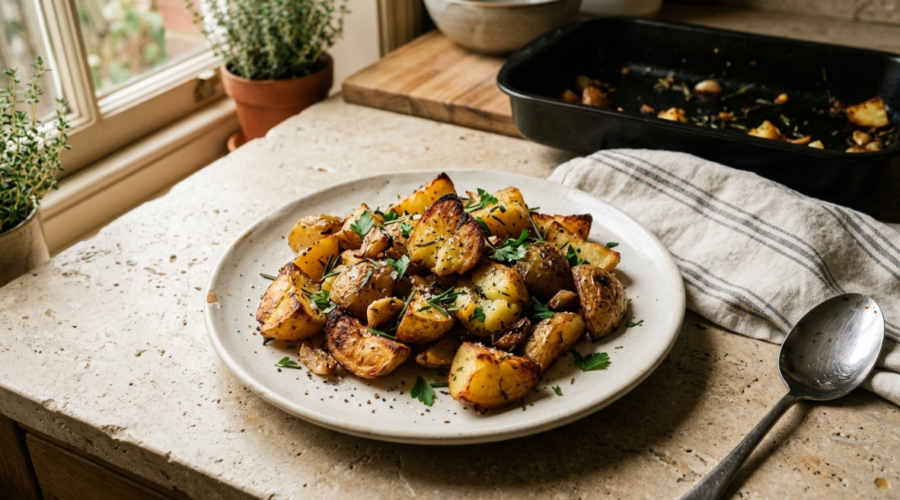
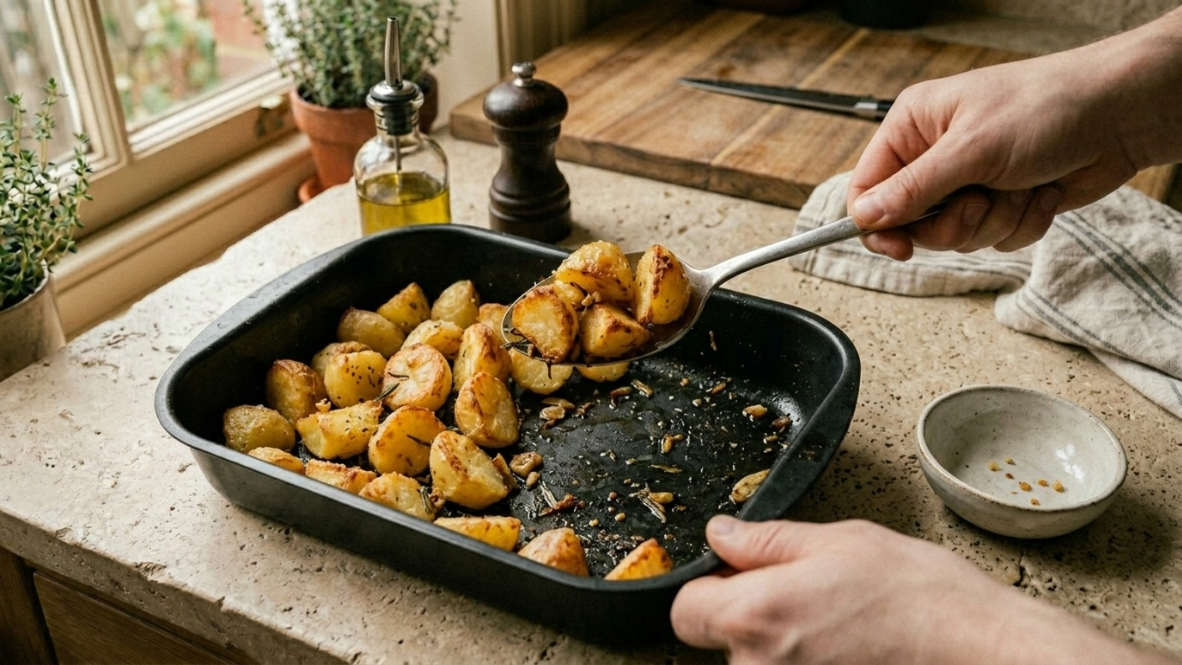
Few side dishes work as hard as a tray of crispy roasted potatoes. They fit beside roast chicken, grilled meat, fish, eggs, holiday dinners, and even a simple weeknight salad. This version is built for golden edges, fluffy centers, and a warm garlic-rosemary aroma that makes the kitchen smell like a proper home-cooked meal.
The method matters. Instead of just tossing raw potatoes with oil and hoping for the best, the potatoes are briefly parboiled, drained, roughed up, and roasted on a hot pan. I adjusted the timing so the garlic does not burn before the potatoes crisp, which is a common problem with roasted potato recipes. The result is practical, simple, and reliable: crisp outside, tender inside, with rosemary in the background instead of overpowering the whole dish.
These potatoes are especially useful when you need a side dish that feels comforting but does not need fancy ingredients or complicated steps.
Quick Recipe Summary
| Detail | Information |
|---|---|
| Prep Time | 15 minutes |
| Cook Time | 40 minutes |
| Total Time | 55 minutes |
| Servings | 4 servings |
| Difficulty | Easy |
| Best For | Sunday dinner, holidays, weeknight sides, family meals |
| Main Ingredients | Potatoes, garlic, rosemary, olive oil, salt, pepper |
| Estimated Calories | About 230 calories per serving, approximate |
Why This Recipe Works
- Parboiling creates a fluffy center. Boiling the potatoes briefly before roasting softens the inside. This gives you that tender, almost creamy middle instead of a dry potato.
- Rough edges turn crisp in the oven. After draining, shaking the potatoes lightly creates uneven edges. Those small broken surfaces catch oil and brown beautifully.
- A hot sheet pan improves browning. Starting the potatoes on a hot pan helps the bottom crust form faster. This prevents pale, soft potatoes.
- Garlic is added later to avoid bitterness. Garlic burns faster than potatoes roast. Adding it partway through gives you garlic flavor without harsh, bitter pieces.
- Rosemary gives flavor without needing many ingredients. Fresh rosemary adds a woodsy aroma that works well with potatoes and olive oil. Using the right amount keeps it balanced.
- Spacing prevents steaming. Potatoes need room on the tray. If they are crowded, moisture gets trapped and the potatoes steam instead of roast.
Ingredients You Need
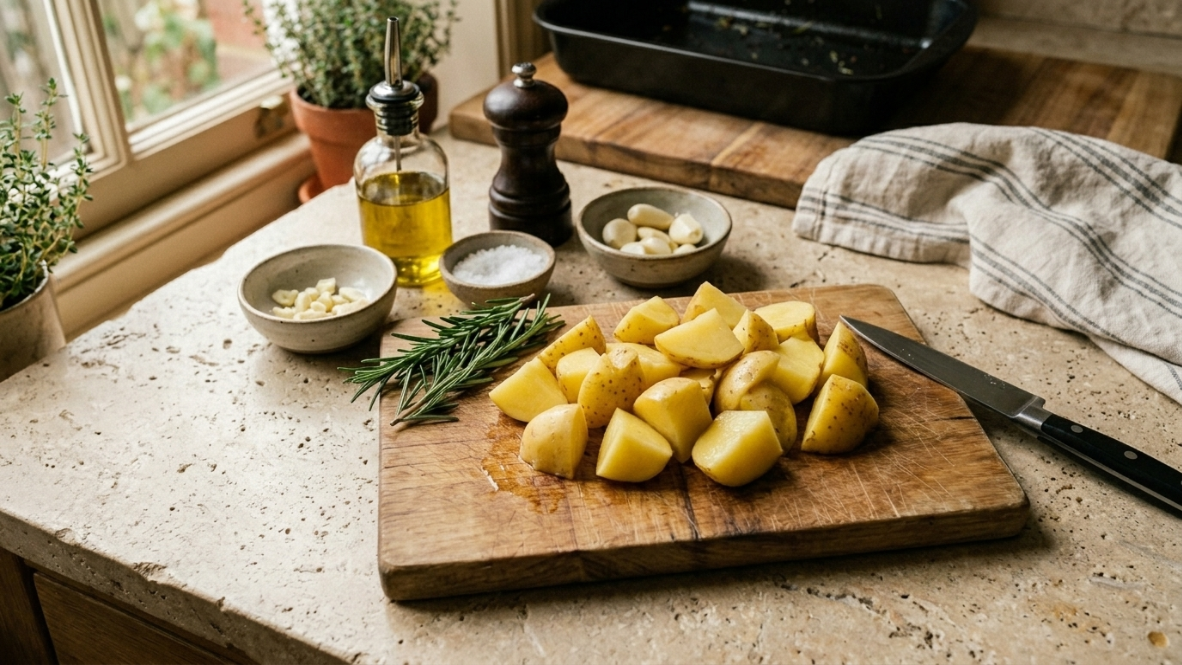
- 2 pounds Yukon Gold potatoes or red potatoes: Yukon Gold potatoes roast well because they stay creamy inside while browning outside. Red potatoes also work. Avoid very waxy baby potatoes if you want extra-crispy rough edges.
- 3 tablespoons olive oil: Olive oil helps the potatoes brown and adds flavor. You can use avocado oil if you want a more neutral taste. Avoid using too little oil, or the potatoes may turn dry instead of crisp.
- 4 garlic cloves, finely minced: Garlic gives the potatoes a warm, savory flavor. Fresh garlic tastes best here. Garlic powder can work in a hurry, but it will not give the same roasted aroma.
- 1 1/2 tablespoons fresh rosemary, finely chopped: Fresh rosemary gives the best flavor. Dried rosemary can be used, but reduce it to about 1 teaspoon because it is stronger and sharper.
- 1 teaspoon kosher salt, plus more to taste: Potatoes need enough salt. Add some before roasting, then taste at the end and adjust.
- 1/2 teaspoon black pepper: Freshly cracked pepper gives a better flavor than pre-ground pepper.
- 1 tablespoon unsalted butter, optional: Tossing the potatoes with a little butter after roasting adds richness. Do not add it before roasting because butter can burn at high heat.
- 1 tablespoon chopped parsley, optional: Parsley adds freshness and color at the end.
- A small squeeze of lemon juice, optional: Lemon brightens the final flavor, especially if serving with chicken, fish, or rich meats.
Step-by-Step Instructions
- Preheat the oven and pan. Place a large baking sheet in the oven and preheat to 425°F. Let the pan heat while you prepare the potatoes. A hot pan helps the first side brown instead of sticking and steaming.
- Cut the potatoes evenly. Wash and dry the potatoes, then cut them into 1 1/2-inch chunks. Try to keep the pieces close in size so they cook evenly. Very small pieces may burn before the larger ones are tender.
- Parboil until just tender on the edges. Add the potatoes to a pot of cold salted water. Bring to a boil, then cook for 8 to 10 minutes. The edges should look slightly softened, but the potatoes should not be falling apart.
- Drain and steam dry. Drain the potatoes well, then let them sit in the colander for 3 to 5 minutes. Steam drying removes extra moisture. Wet potatoes do not crisp well.
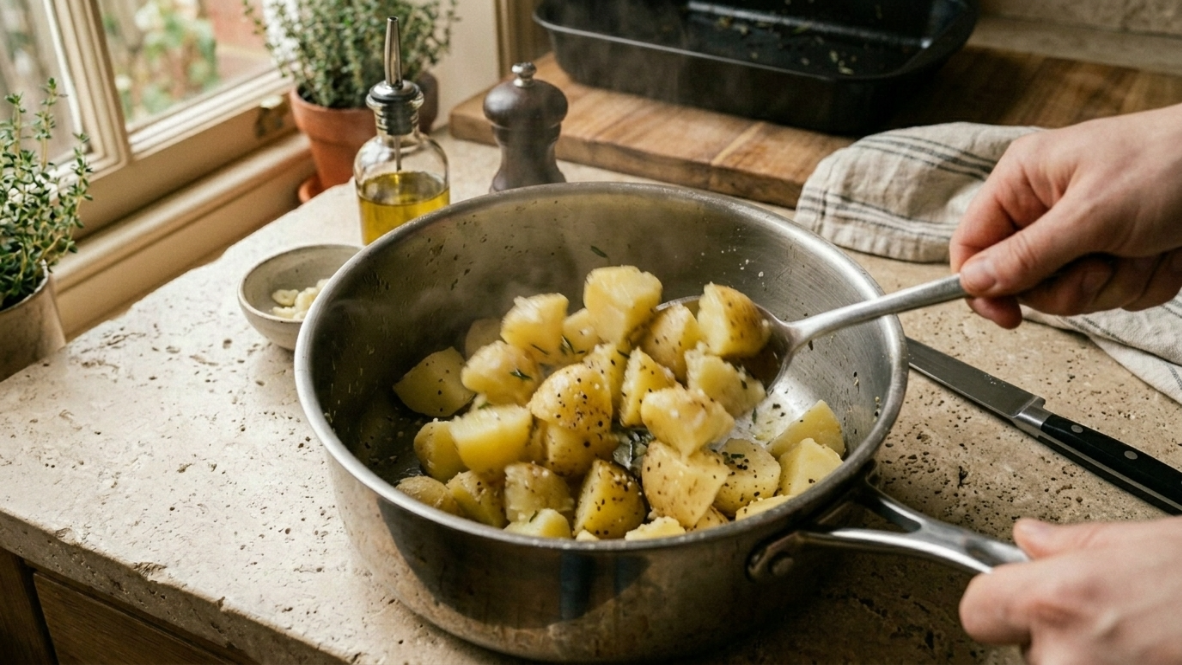
- Rough up the surface. Return the potatoes to the empty pot. Cover with the lid and shake gently for a few seconds. The goal is to scuff the edges, not mash the potatoes. The rough surface becomes the crispy crust.
- Season with oil, salt, pepper, and rosemary. Add olive oil, salt, pepper, and chopped rosemary. Toss gently until the potatoes are coated. Do not add the garlic yet; it needs less time in the oven.
- Roast on the hot pan. Carefully remove the hot baking sheet from the oven. Spread the potatoes in a single layer, cut sides down where possible. Leave space between pieces. Roast for 25 minutes without moving them too early.
- Flip and add garlic. After 25 minutes, flip the potatoes with a spatula. Add the minced garlic and toss lightly so it touches the oil but does not sit in large piles. Roast for another 12 to 15 minutes, until the potatoes are deeply golden and crisp.
- Finish and taste. Remove from the oven. Toss with butter if using, then add parsley and a small squeeze of lemon if you like. Taste one potato while it is hot and adjust the salt before serving.
Expert Secret
The secret is steam-drying before roasting. The most important technique in this recipe is letting the potatoes steam dry after boiling. When potatoes come out of the water, their surface is wet. If you add oil right away, the oil cannot coat the potato properly, and the oven has to dry the surface before it can brown.
Steam-drying solves that problem. The leftover heat pushes moisture off the surface, leaving the edges drier and more ready to crisp.
The common mistake is rushing this step. Many people drain the potatoes, add oil immediately, and wonder why the texture turns soft. Let them sit for at least 3 minutes after draining. If you see steam rising, that is good. It means moisture is leaving the potato instead of staying trapped on the surface.
Common Mistakes to Avoid
- Crowding the baking sheet: Crowded potatoes release steam and become soft. Use a large pan or divide the potatoes between two pans.
- Adding garlic too early: Garlic can burn before the potatoes finish roasting. Add it after the potatoes have already started browning.
- Skipping the parboil: Raw potatoes can roast well, but they often take longer and may not get the same fluffy center. Parboiling gives a better contrast between crisp outside and soft inside.
- Not using enough salt: Potatoes need seasoning. If they taste flat, the problem is often not enough salt, not the recipe itself.
- Turning the potatoes too soon: If you move them before a crust forms, they may stick and tear. Let them roast undisturbed for the first 20 to 25 minutes.
- Using large rosemary pieces: Big rosemary leaves can feel tough. Chop rosemary finely so the flavor spreads evenly.
Pro Tips and Variations
Pro tips:
- Use a metal baking sheet instead of glass. Metal gives better browning.
- Cut the potatoes into similar sizes so they cook at the same speed.
- Place more cut sides down for better crust.
- Finish with salt right after roasting while the potatoes are hot.
- For extra crispness, leave the potatoes in the oven for 5 more minutes after turning the heat off, with the door slightly open.
Variations:
- Parmesan version: Add grated Parmesan during the last 5 minutes of roasting.
- Spicy version: Add 1/2 teaspoon crushed red pepper flakes with the rosemary.
- Lemon herb version: Finish with lemon zest and parsley for a fresher flavor.
- Family-friendly version: Use less rosemary and add a small amount of garlic powder instead of strong fresh garlic.
- Lighter version: Use 2 tablespoons olive oil instead of 3, but spread the potatoes well so they still brown.
Storage and Reheating
Store leftover potatoes in an airtight container in the refrigerator for up to 4 days. Let them cool before closing the container so extra steam does not make them soggy.
Freezing is possible, but not ideal. Roasted potatoes can become softer after thawing. If you do freeze them, place them in a freezer-safe bag and use within 1 month.
The best way to reheat them is in the oven or air fryer. Heat at 400°F until hot and crisp again, usually 8 to 12 minutes. A skillet also works if you use medium heat and a small splash of oil.
Avoid microwaving if you care about texture. The microwave warms the potatoes, but it makes the crust soft.
What to Serve With This Recipe
These crispy potatoes work with many meals. Try them with:
- Roast chicken or grilled chicken thighs
- Pan-seared steak or lamb chops
- Baked salmon or white fish
- Fried eggs or a simple omelet
- Green salad with lemon vinaigrette
- Garlic yogurt sauce or homemade aioli
Internal linking suggestions:
- Link to your roasted chicken recipe here.
- Link to your quick green salad recipe here.
- Link to your homemade garlic sauce recipe here.
- Link to your easy no-bake dessert recipe here.
Frequently Asked Questions
Can I make these potatoes without parboiling?
Yes, but they will not be quite as fluffy inside. If skipping the parboil, cut the potatoes smaller and roast them longer, turning once or twice.
What potatoes are best for crispy roasted potatoes?
Yukon Gold potatoes are a strong choice because they get creamy inside and crisp outside. Russet potatoes get very crisp but can break more easily.
Can I use dried rosemary instead of fresh?
Yes. Use about 1 teaspoon dried rosemary instead of 1 1/2 tablespoons fresh. Crush it slightly between your fingers before adding it.
Why did my roasted potatoes turn soft?
They were probably too wet, too crowded, or not roasted at a high enough heat. Dry them well, give them space, and roast at 425°F.
Can I prepare them ahead of time?
You can parboil and rough up the potatoes a few hours ahead. Keep them uncovered in the refrigerator, then toss with oil and roast before serving.
How do I keep garlic from burning?
Add garlic during the final 12 to 15 minutes of roasting. Do not add it at the beginning.
Recipe Card
Recipe Name: Grandma’s Crispy Garlic Rosemary Roasted Potatoes
Prep Time: 15 minutes
Cook Time: 40 minutes
Total Time: 55 minutes
Servings: 4 servings
Ingredients:
- 2 pounds Yukon Gold potatoes or red potatoes, cut into chunks
- 3 tablespoons olive oil
- 4 garlic cloves, finely minced
- 1 1/2 tablespoons fresh rosemary, finely chopped
- 1 teaspoon kosher salt, plus more to taste
- 1/2 teaspoon black pepper
- 1 tablespoon unsalted butter, optional
- 1 tablespoon chopped parsley, optional
- Small squeeze of lemon juice, optional
Instructions:
- Preheat oven to 425°F with a large baking sheet inside.
- Cut potatoes into even 1 1/2-inch chunks.
- Add potatoes to cold salted water, bring to a boil, and cook for 8 to 10 minutes.
- Drain well and let steam dry for 3 to 5 minutes.
- Return potatoes to the pot and shake gently to rough up the edges.
- Toss with olive oil, salt, pepper, and rosemary.
- Spread on the hot baking sheet in a single layer.
- Roast for 25 minutes without moving.
- Flip potatoes, add garlic, and roast 12 to 15 minutes more.
- Finish with butter, parsley, lemon juice, and extra salt if needed.
Notes:
- Add garlic later so it does not burn.
- Do not crowd the pan.
- For extra crisp potatoes, use a metal baking sheet.
- Calories are approximate and depend on exact ingredients used.
Author Note
This recipe is useful because it turns simple potatoes into a side dish that feels special without needing expensive ingredients. The key test was getting the garlic timing right, because adding it too early made the flavor bitter. For the best result, do not rush the steam-drying step after boiling. That small pause makes a big difference in crispness.